

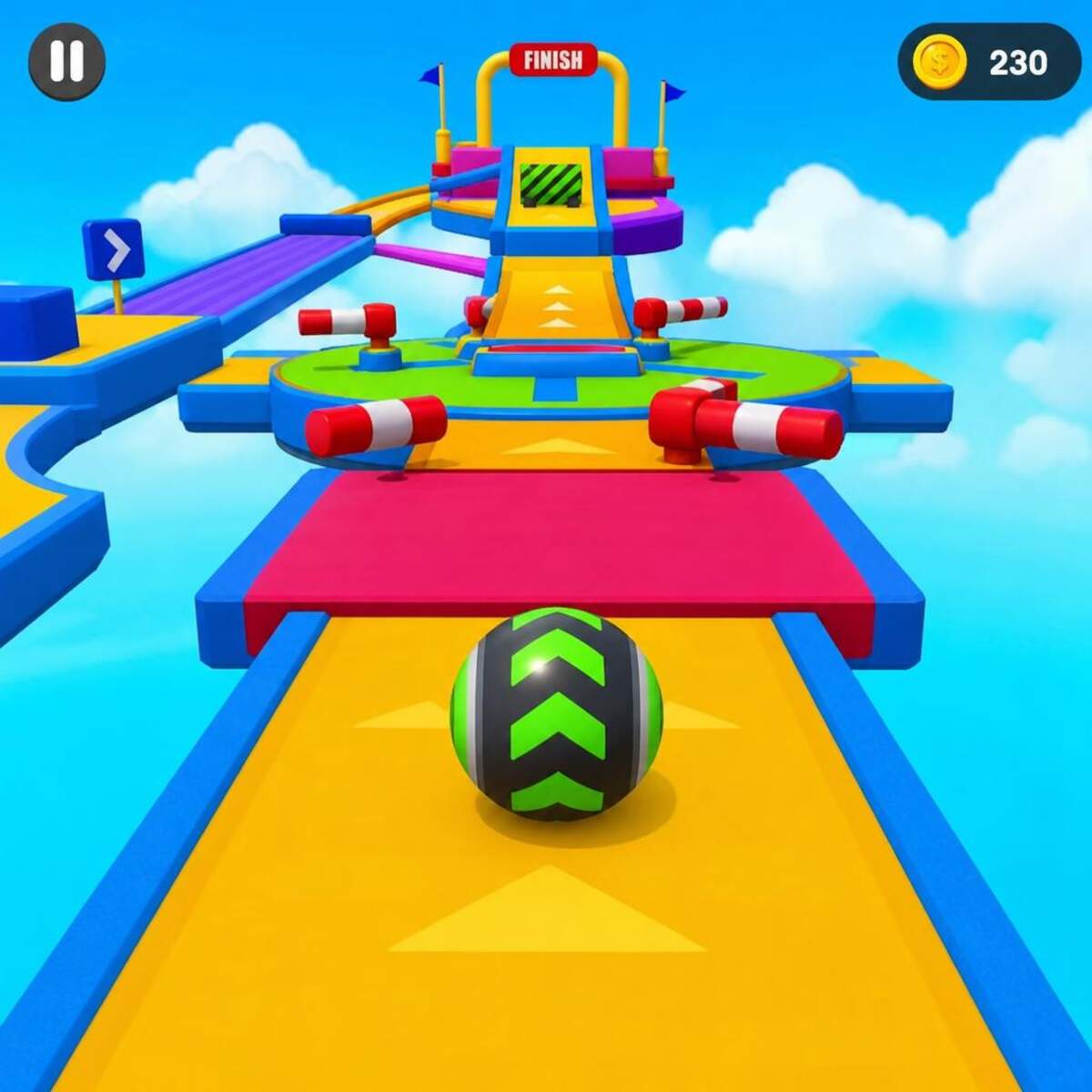
Online ball games have become a popular part of online gaming because they are easy to understand, quick to start, and surprisingly satisfying to master. Whether you enjoy rolling through obstacle courses, scoring goals, bouncing through puzzles, or competing in fast multiplayer games, this category offers something for nearly every kind of player. This guide explains what online ball games are, why they remain so engaging, how to choose the right ones, and what to keep in mind when playing casually or competitively. The actual Interesting Info about putrawin78c.site.
What makes online ball games so appealing?
Online ball games are appealing because they combine simple controls with clear goals and immediate feedback. A player can usually understand the basic idea within seconds: move the ball, avoid hazards, hit a target, outscore an opponent, or reach the finish line. That low barrier to entry makes the genre friendly for beginners, while timing, accuracy, strategy, and reflexes give experienced players plenty of room to improve.
The best part is how flexible the category is. Some games feel relaxed and puzzle-like, asking you to think carefully before each move. Others are fast, competitive, and chaotic, especially when played with real people online. This variety is one reason searches for terms like going balls online, browser ball games, and skill-based ball challenges continue to attract players who want quick entertainment without a complicated setup.
Online ball games also have a universal quality. A rolling, bouncing, or flying ball is easy to understand across ages and languages. You do not need deep lore, complex menus, or long tutorials to enjoy the experience. The concept is familiar, but the execution can be endlessly creative.
The broad world of ball-based online gaming
Online ball games are not limited to a single style. The term can refer to sports simulations, arcade challenges, physics puzzles, racing courses, marble runs, aiming games, and competitive arenas. What connects them is the central role of a ball-like object and the player’s ability to control, guide, launch, defend, or score with it.
In many ways, ball games are a perfect fit for online gaming. They work well in short sessions, often load quickly, and can be enjoyable on desktops, laptops, tablets, and mobile devices. Many also use physics as a core mechanic, which makes every movement feel active and responsive. When a ball speeds down a ramp, bounces off a wall, or narrowly avoids a gap, the player gets a direct sense of cause and effect.
This makes the genre especially accessible. Players who do not consider themselves “gamers” can still enjoy a simple ball puzzle or rolling challenge. At the same time, players who love competition can find multiplayer games that demand positioning, teamwork, precision, and fast decision-making.
Common types of online ball games
A helpful way to understand the category is to look at its major styles. Many games blend several of these, but most fit into one or more of the following groups:
- Rolling obstacle games: Players guide a ball through ramps, bridges, platforms, traps, and moving hazards. The goal is often to reach the end without falling or losing control.
- Sports-inspired games: These include online versions or variations of soccer, basketball, volleyball, bowling, golf, pool, and other sports where the ball is central to scoring.
- Physics puzzle games: The challenge comes from angles, gravity, momentum, timing, and environmental interaction. Players may need to push, drop, launch, or redirect a ball to solve each level.
- Arcade action games: These games focus on speed, reflexes, survival, and high scores. They are usually easy to replay and often become more difficult over time.
- Multiplayer arena games: Players compete or cooperate in real time, using ball mechanics to score points, block opponents, or control space.
- Aim-and-shoot ball games: These involve launching balls toward targets, matching colors, breaking objects, or clearing stages through careful shots.
The variety matters because players often arrive with different goals. One person may want a relaxing puzzle during a break. Another may want a competitive match against friends. A third may simply want to play going balls online because they enjoy obstacle courses that test balance and timing.
Why do players search for going balls online?
Players who search for online ball-rolling games are usually looking for an easy way to play a rolling-ball obstacle course directly on an internet-connected device. The phrase often points to interest in quick access, simple controls, level-based challenges, and the satisfying feeling of steering a ball through narrow paths, ramps, turns, and hazards. For many players, the appeal is not just finishing a level, but improving with each attempt.
The search intent is practical. People want to know where to play, what the gameplay is like, whether it is suitable for short sessions, and how to get better. They may also be comparing similar ball games or looking for versions that are available in a browser. Because online versions can vary, it is useful to focus on general play qualities rather than assuming every site or version is identical.
A typical rolling-ball challenge rewards patience as much as speed. Moving too fast can send the ball off the edge, while moving too slowly can make timed obstacles harder. Good players learn how momentum works, when to accelerate, when to pause, and how to line up the ball before a difficult section.
What to expect from rolling-ball obstacle games
Rolling-ball games tend to feel simple at first, but their difficulty often grows through level design. Early stages may introduce basic movement and safe platforms. Later levels may add rotating hammers, thin bridges, sudden drops, moving tiles, tight corners, or jumps that require careful timing.
The fun comes from a loop that is easy to understand:
- You start a level with a clear objective. Usually, the goal is to reach a finish area, collect items, or survive a course.
- You learn the layout by moving through it. Mistakes reveal where you need to slow down, turn earlier, or control momentum.
- You improve through repetition. Each attempt teaches you something about the path, obstacle timing, or ball handling.
- You finish with a sense of progress. Completing a difficult section feels rewarding because it shows your own control has improved.
This is why going balls online can be engaging even when the core idea is simple. The player is not only moving a ball from point A to point B. They are reading the course, adjusting their speed, reacting to hazards, and building confidence one attempt at a time.
The role of physics, timing, and control
A strong ball game feels good because movement matters. When controls respond smoothly, players can sense the relationship between input and outcome. A small tap might make the ball drift forward. Holding a key or pressing longer might build speed. Turning sharply at the wrong moment might create too much momentum and cause a fall.
This connection between movement and consequence is central to the genre. It creates tension without needing complicated rules. The player sees the platform, judges the angle, makes the move, and immediately learns whether the choice worked.
Physics also makes gameplay feel organic. Even simple ball games can produce surprising moments because rolling, bouncing, sliding, and colliding create dynamic outcomes. A near miss can feel exciting. A lucky bounce can save a run. A slight overcorrection can turn an easy platform into a challenge.
Practical control tips for smoother play
Players who struggle with online ball games often press too hard, rush turns, or react late. A few small adjustments can make the experience more enjoyable:
- Use gentle movements first. Many ball games reward controlled pressure rather than constant maximum speed.
- Look ahead, not just at the ball. Watch the next ramp, gap, or obstacle so you can prepare early.
- Slow down before narrow paths. Speed is useful on straight sections, but control matters more on thin platforms.
- Turn before you reach the edge. Balls carry momentum, so late turns often become wide turns.
- Practice difficult sections deliberately. Instead of restarting angrily, focus on one improvement each attempt.
- Adjust your device setup. A comfortable keyboard, mouse, touchscreen, or controller can make movement feel more consistent.
These tips apply to many ball-based online gaming experiences, from casual browser challenges to more competitive formats. The exact controls may change, but the basic skill is the same: learn how the ball responds, then move with intention.
Multiplayer games add competition and connection
Multiplayer games bring a different kind of energy to online ball games because real people create unpredictable moments. Instead of only completing a course or beating a timer, players must respond to opponents, teammates, shifting positions, and shared objectives. This can make even a simple ball mechanic feel fresh from one match to the next.
In a multiplayer ball game, the challenge is rarely just technical control. You may need to predict where another player will move, defend a goal, pass at the right moment, block a shot, or choose between chasing the ball and holding a better position. These decisions add strategy, especially in team-based modes.
Multiplayer experiences can also make games more social. Friends can play casually, compete for bragging rights, or work together toward a shared win. Even short matches can create memorable moments because the outcome depends on interaction rather than a fixed level.
How multiplayer changes the way you play
Single-player ball games usually reward pattern recognition. Once you learn the course, you can improve by repeating it. Multiplayer games are less predictable because other players constantly change the situation.
That means successful players often develop different habits:
- They watch player movement, not only the ball. Reading opponents helps you predict passes, shots, blocks, or collisions.
- They value positioning. Being in the right place often matters more than chasing the ball at full speed.
- They communicate when possible. Simple signals, chat, or voice coordination can improve teamwork.
- They stay flexible. A strategy that works once may fail when opponents adapt.
- They manage emotions. Competitive matches are more enjoyable when players stay respectful and avoid frustration spirals.
For beginners, the best approach is to treat early matches as practice. Winning is fun, but learning how the game flows is more important at first. Over time, small improvements in timing, awareness, and decision-making can make a major difference.

Choosing the right online ball game for your play style
Not every ball game suits every player. Some are fast and demanding. Others are calm and thoughtful. Some focus on solo progression, while others are built around competition. Choosing the right game starts with knowing what kind of experience you want.
If you want a quick break, look for games with short levels, simple controls, and instant restarts. If you want a longer challenge, level-based progression or ranked multiplayer may be more satisfying. If you enjoy problem-solving, physics puzzles may be a better fit than reflex-heavy arcade games.
A simple checklist before you play
Before spending time on a new online ball game, consider these practical points:
- Session length: Can you enjoy it in five minutes, or does it require longer focus?
- Control style: Does it work better with keyboard, mouse, touchscreen, or controller?
- Difficulty curve: Does the game teach you gradually, or does it become frustrating too quickly?
- Solo or multiplayer focus: Do you want to relax alone, compete with others, or play with friends?
- Replay value: Are there levels, challenges, scores, customization options, or modes that encourage repeat play?
- Device performance: Does the game run smoothly on your device and connection?
- Age suitability: Are the visuals, ads, chat features, and gameplay appropriate for the intended player?
- Access and account needs: Can you play instantly, or do you need to create an account or download something?
This checklist is especially useful for parents, teachers, casual players, and anyone who wants a low-hassle gaming experience. A game does not need to be complex to be good; it needs to match the player’s expectations.
Ball games for casual players
Casual players often want games that are easy to start and easy to leave. Online ball games fit that pattern well because many use clear objectives and short rounds. You can play one level, take a break, and return later without needing to remember a long storyline or complicated control scheme.
For casual play, the most enjoyable games tend to offer quick restarts and a fair difficulty level. Losing should feel like a chance to try again, not a punishment. A good casual ball game gives you enough challenge to stay engaged but not so much pressure that the session becomes stressful.
Rolling games, bubble shooters, simple sports challenges, and physics puzzles are often strong choices for this audience. They provide satisfying interaction without demanding intense focus every second. Even competitive multiplayer games can work for casual players if matches are short and the community is welcoming.
Signs of a good casual experience
A casual-friendly online ball game usually includes several of these qualities:
- Clear goals that are easy to understand
- Short levels or matches
- Simple controls with responsive movement
- Fast retry options after mistakes
- Gradual learning rather than sudden difficulty spikes
- Visual clarity, so hazards and targets are easy to see
- Minimal setup before playing
- A sense of progress, even in short sessions
These details matter because casual players are often fitting games into small pockets of time. The smoother the entry, the more likely the game is to feel enjoyable rather than demanding.
Ball games for competitive players
Competitive players usually look for depth. They want mechanics that reward skill, modes that support repeat play, and opponents who push them to improve. In ball-based multiplayer games, that depth can come from movement mastery, team strategy, aiming precision, defensive positioning, or smart decision-making under pressure.
A competitive ball game does not have to look complicated. Some of the strongest competitive designs are built on simple rules. The depth comes from how players use those rules against each other. When timing, prediction, and positioning matter, matches can stay interesting for a long time.
Players who want to improve should focus on fundamentals before advanced techniques. It is tempting to chase flashy moves, but consistent control, smart spacing, and calm reactions usually produce better results. In team modes, understanding your role can be just as important as mechanical skill.
Habits that help competitive improvement
If you want to get better at competitive online ball games, build habits around reflection and consistency:
- Warm up with basic movement. Spend a few minutes practicing turns, stops, launches, or shots before serious matches.
- Review common mistakes. Notice whether you lose because of poor positioning, rushed decisions, weak timing, or risky movement.
- Practice one skill at a time. Focus on accuracy, defense, passing, or obstacle control instead of trying to fix everything at once.
- Learn from stronger players. Watch how they move, when they slow down, and how they create opportunities.
- Stay composed after errors. A single mistake does not need to ruin the match. Reset mentally and play the next moment well.
- Respect teammates and opponents. Good sportsmanship keeps the game enjoyable and makes teamwork easier.
Competitive play is most rewarding when improvement becomes part of the fun. Every match gives feedback. The players who benefit most are the ones who pay attention to that feedback without losing sight of enjoyment.
Safety, privacy, and healthy play habits
Online gaming is fun, but it is still worth approaching it with basic safety and balance. This is especially important for younger players or anyone using public websites, multiplayer chat, or account-based platforms. A game can be entertaining and still require thoughtful choices about privacy, time, and interactions.
Start with the basics: avoid sharing personal information, use strong passwords when accounts are required, and be cautious with unknown links or downloads. If a game includes chat, remember that not every player will behave respectfully. Muting, blocking, reporting, or leaving a match are reasonable options when interactions become uncomfortable.
Healthy play habits matter too. Ball games can be highly replayable because levels are short and restarts are instant. That design is enjoyable, but it can also make “one more try” turn into a much longer session than planned. Setting soft limits helps keep play relaxing.
A practical healthy-play checklist
Use this checklist to make online ball games more enjoyable and balanced:
- Set a time window before starting. Decide whether you are playing for ten minutes, thirty minutes, or a longer session.
- Take breaks during intense play. Step away if your hands, eyes, or posture feel strained.
- Pause after repeated frustration. If you fail the same section many times, a short break often helps more than forcing another attempt.
- Keep personal details private. Do not share your full name, address, school, phone number, or account information in game chats.
- Use platform safety tools. Mute, block, or report players when needed.
- Check settings for younger players. Review chat, friend requests, ads, purchases, and privacy options when available.
- Choose age-appropriate games. Consider the content, community features, and advertising environment, not just the gameplay.
These habits do not take the fun out of gaming. They protect the fun by making sessions safer, calmer, and easier to manage.
Accessibility and device considerations
One reason online ball games are popular is that many of them can be played on different devices. Still, the experience can vary depending on screen size, controls, connection quality, and performance. A game that feels smooth on a desktop may feel harder on a small touchscreen, while a mobile-friendly game may feel less precise with a keyboard.
Controls are especially important. Rolling and physics-based games often require subtle movement. If the control method feels awkward, the game may seem harder than it really is. Trying a different device, adjusting sensitivity if available, or switching from touchscreen to keyboard can improve the experience.
Visual clarity matters as well. Ball games often rely on quick reactions to edges, obstacles, color cues, and moving objects. Players benefit when the screen is bright enough, the game runs smoothly, and the play area is not cluttered.
How to improve the setup
Small setup changes can make online ball games more comfortable:
- Play on a stable internet connection, especially for multiplayer games.
- Use a larger screen for obstacle courses with narrow platforms or distant hazards.
- Close unnecessary apps or browser tabs if performance feels choppy.
- Adjust sound levels so effects help rather than distract.
- Sit comfortably, particularly during longer sessions.
- If available, experiment with control sensitivity or input options.
- For mobile play, clean the screen and use both hands when precision matters.
The goal is not to create a professional gaming station. It is simply to remove avoidable frustration. When the device, controls, and connection feel reliable, the player can focus on the game itself.
The learning benefits of ball-based games
Online ball games are mainly entertainment, but they can also build useful skills. Many encourage hand-eye coordination, timing, spatial awareness, pattern recognition, and problem-solving. A player guiding a ball through a narrow course is constantly judging speed, distance, angles, and risk.
Puzzle-based ball games can support planning and experimentation. Players may need to test a solution, observe what happens, and adjust their approach. That trial-and-error loop is simple, but it teaches persistence and flexible thinking.
Multiplayer ball games can add communication and teamwork. Players learn to share space, respond to teammates, anticipate opponents, and recover from mistakes. These are not formal lessons, but they are real forms of practice when approached thoughtfully.
Skills players often practice naturally
Different types of ball games emphasize different abilities:
- Coordination: Moving, aiming, jumping, or steering with precision.
- Timing: Acting at the right moment to avoid hazards, pass, shoot, or bounce.
- Spatial awareness: Understanding where the ball, obstacles, goals, and other players are.
- Decision-making: Choosing when to move fast, slow down, attack, defend, or retry.
- Patience: Learning from repeated attempts without giving up immediately.
- Team awareness: Supporting others in cooperative or competitive multiplayer games.
These benefits are strongest when play remains balanced and positive. A game does not need to be labeled educational to encourage useful thinking, but it should still be played in a healthy context.
How design keeps online ball games fresh
The basic idea of controlling a ball may be simple, but designers can create variety through level structure, physics, objectives, visuals, and challenge types. A ball rolling across a flat surface is easy. Add slopes, moving platforms, breakable tiles, rotating barriers, or timed gates, and the same movement system becomes much more interesting.
Good design introduces new ideas gradually. Players learn one mechanic, practice it, and then see it combined with another. For example, a game might first teach narrow paths, then moving platforms, then narrow paths on moving platforms. This layering keeps the experience fresh without overwhelming the player.
Replayability often comes from mastery. A level may be possible to finish slowly, but difficult to finish quickly. A shot may be easy from one angle but challenging under pressure. A multiplayer match may use the same arena but feel different because each opponent behaves differently.
Design elements that create replay value
Online ball games often stay engaging because of features like these:
- Varied level layouts: New paths, hazards, ramps, and goals prevent repetition.
- Progressive difficulty: Challenges become harder as players gain confidence.
- Short restart loops: Quick retries make failure feel less discouraging.
- Skill-based outcomes: Players can see improvement through better control or higher scores.
- Optional challenges: Collectibles, time goals, or harder routes give advanced players more to do.
- Multiplayer unpredictability: Human opponents create fresh situations every match.
- Visual themes: Changing environments can make familiar mechanics feel new.
The strongest games do not rely only on novelty. They make the core action feel good enough that players want to repeat it.
Parents and educators can evaluate games thoughtfully
For parents and educators, online ball games can be a reasonable option when chosen carefully. The key is to look beyond the title or graphics and consider the full experience. Is the game age-appropriate? Are there ads or chat features? Does it require an account? Does it encourage short, manageable sessions or long, continuous play?
Because ball games are often simple and skill-based, they can be useful for short breaks or reward periods. Puzzle and physics games may also support problem-solving in an informal way. However, supervision and boundaries remain important, particularly on websites that host many different games.
A practical approach is to play or preview the game first. Spend a few minutes checking the controls, content, menus, ads, and any social features. If the game includes multiplayer, review how communication works and whether safety settings are available.
Questions adults can ask before allowing play
A quick review can prevent many issues:
- Is the gameplay suitable for the player’s age and temperament?
- Are ads, pop-ups, or external links present?
- Does the game include chat, friend requests, or user-generated names?
- Can the player spend money or access purchases?
- Is the game easy to pause or stop?
- Does frustration stay manageable, or does the design pressure constant replay?
- Are privacy settings available if an account is involved?
These questions help adults make informed choices without treating all online gaming as the same. A calm puzzle game and an open multiplayer environment can feel completely different, even if both involve a ball.
Trends shaping online ball games
Online ball games continue to evolve as devices, browsers, and player habits change. Many players now expect games to be quick to access, visually clear, and playable across multiple screens. They also expect smoother controls, faster loading, and more social features than older browser games typically offered.
Multiplayer design is one of the biggest influences on the category. Real-time competition, cooperative challenges, shared arenas, and friend-based play can turn simple ball mechanics into ongoing communities. At the same time, casual single-player experiences remain important because not every player wants competition.
Customization is another common direction. Players often enjoy changing the look of the ball, unlocking visual themes, or personalizing the experience. These features do not replace strong gameplay, but they can make progress feel more personal.
What players are likely to keep valuing
Even as technology changes, the core expectations remain familiar:
- Fast access with minimal setup
- Responsive controls
- Fair challenge and clear feedback
- Short sessions that still feel rewarding
- Options for both solo and social play
- Safe, respectful multiplayer environments
- Creative levels that test skill without feeling random
The future of online ball games will likely continue to balance simplicity and depth. Players want games that are easy to start, but they also want enough challenge to keep coming back.
Getting more enjoyment from every session
The easiest way to enjoy online ball games is to match the game to your mood. If you are tired, a calm physics puzzle or simple rolling challenge may be better than a competitive match. If you want excitement, multiplayer games or timed obstacle courses can provide more intensity. If you want steady improvement, choose a game with levels, scores, or mechanics you can practice over time.
It also helps to set a small goal before playing. That goal does not need to be serious. You might aim to complete one difficult level, improve your score, try a new mode, win a match with friends, or simply relax for a few minutes. A clear goal gives the session shape and makes it easier to stop on a satisfying note.
Simple ways to make play more rewarding
Try these practical ideas during your next session:
- Start with an easier level or mode. Build rhythm before tackling harder challenges.
- Focus on control before speed. Fast play is more effective when movement is stable.
- Celebrate small improvements. Reaching a later checkpoint or making fewer mistakes still counts.
- Switch games when frustration builds. A different style may reset your mood.
- Invite friends when the game supports it. Shared play can make simple mechanics more memorable.
- Take breaks after intense rounds. Short pauses help keep reactions sharp and frustration low.
These habits are simple, but they make a noticeable difference. Online ball games are often built around repetition, and repetition feels better when it is guided by curiosity rather than pressure.
Common mistakes new players make
New players often assume ball games are only about speed. In reality, many are about controlled momentum. Going too fast may look exciting, but it can make turns wider, jumps riskier, and recovery harder. Slowing down at the right moment is often the difference between a clean run and a restart.
Another common mistake is staring only at the ball. While the ball matters, the next obstacle matters more. Looking ahead gives your brain time to plan, which is especially important in games with narrow platforms, moving hazards, or competitive opponents.
In multiplayer games, beginners may constantly chase the ball. This is understandable, but it can leave open space behind them or make team play chaotic. Better positioning often creates more useful opportunities than constant pursuit.
Mistakes to watch for
If you are learning a new ball game, pay attention to these habits:
- Holding maximum speed through every section
- Turning too late near edges or corners
- Ignoring the next obstacle until it is too close
- Restarting quickly without learning from the mistake
- Chasing the ball in multiplayer instead of holding position
- Getting frustrated after normal learning errors
- Playing on a device or connection that makes control harder
Correcting these mistakes does not require advanced skill. It requires awareness. Once you notice what is causing most failures, improvement becomes much easier.
The lasting appeal of a simple idea
The world of online ball games proves that a simple concept can support a wide range of experiences. A ball can roll through a maze, bounce through a puzzle, fly toward a target, sit at the center of a sport, or become the focus of a fast multiplayer contest. That flexibility keeps the genre approachable, creative, and endlessly replayable.
For players searching for online ball games, the appeal often lies in the immediate fun of guiding a ball through clever obstacle courses. For others, the draw may be teamwork, competition, puzzles, or quick casual play. Whatever your preference, the best online ball games combine responsive controls, fair challenge, and a clear reason to try again.
Online gaming will continue to change, but ball games are likely to remain a familiar favorite because they deliver fun in a form that is easy to grasp and satisfying to improve. Choose games that match your play style, stay mindful of safety and balance, and focus on the small moments of progress. Sometimes the most enjoyable digital experiences begin with the simplest goal: keep the ball moving.
